As I have researched several topics throughout this semester my attention was always brought to the plight of poverty that is so widespread throughout this nation. The effects of poverty are detrimental to the family as a unit however, as a child that has grown up in that situation the effects are long lasting.
The consequences that I have learned are:
Awareness: I needed to learn what was going on in other nations around the world. Sometimes the hardest thing to do is to get out of your comfort zone and realize what issues are going on around you. Not just in your own backyard. Learning about poverty in other nations make me realize that there are lots of resources that we have here in the United States that other countries may not have. I also realized that giving a little can mean so much to somebody in need. Because of my new found insight I have donated clothing and necessities to Sierra Leone. My co worker is from Sierra Leone and monthly she sends necessities to her family in Africa. She stated that where they are from it is very poor and they do not have a lot. So I decided to help her. We filled up two drums and sent them to Africa.
Another consequence is academic achievement: Research has shown that children that come from poverty may have lower academic achievement throughout their years in school but especially in early childhood. Children in poverty have the right to receive quality education. The importance of education should be stressed and reinforced by parents and the community at large. The schools should provide linkage between themselves and social services. This may help reduce the achievement gap and cause a higher graduation rate among high school seniors. I can help close this gap by being the best teacher I can and help my preschoolers learn about the world through play. The exposure that I give them will enable them to develop the skills that are needed to succeed in higher grade levels.
Finally the last consequence that I learned about was public policies. Programs should be made available to help assist families that are experiencing poverty. Policies that would allow the parents to bring home more in their paychecks by tax breaks. Public information about services that can help assist with nutrition, health care preventive and maintenance, housing subsidies and other programs that help the families.
One goal that I have is to continue to donate to local and national organizations that support children and their families in poverty.
Saturday, October 27, 2012

Saturday, October 20, 2012
Getting To Know You International Contacts Part 3
Since I was unable to establish a professional international contact I visited the United Nations Educational Scientific and Cultural Organization, UNESCO website. UNESCO is dedicated to the building of peace, the eradication of poverty, sustainable development and intercultural dialogue through education, the sciences, culture, communication and information http://www.unesco.org . The primary focus of the organization is Africa and gender equality however, there are other over lapping objectives that are focused upon.
- Attaining quality education for all and lifelong learning
- Mobilizing science knowledge and policy for sustainable development
- Addressing emerging social and ethical challenges
- Fostering cultural diversity, intercultural dialogue and a culture of peace
- Building inclusive knowledge societies through information and communication
On the website I found areas that interested me such as an article that is titled, Fighting Racism and Discrimination. This article discuss cities around the world that are dealing with high discrimination in the areas of housing, employment and education. The areas are addressed, analyzed and policies are developed to help change these problem areas.
International Jazz Day- I was interested in this area because I love Jazz music and play it a lot in my classroom. The children seem to enjoy it as well as I does. I never knew there was an International Jazz Day.


Why International Jazz Day?
What is special about this website is that it deals with global issues and provides resources that are beneficial to set the beginning of awareness. From our studies it is evident that the United States and the world has a long way to go to totally establish and implement resources that will eliminate poverty, provide adequate employment and education for all children regardless of adverse situations.
Saturday, October 13, 2012
Sharing Web Resources
The Children’s
Defense Fund
As I search
through the website one link that caught my attention is the Multimedia and
News column. Under this section you can
gain information on varies topics that have been published in varies newspapers
and columns around the United States.
One article that caught my attention was published in the Huffington
Post, February 2011 was titled, Law of Unintended Consequences. I liked this article because it discussed the
short comings o f the No Child Left Behind Act.
It described the inequality of the initiatives that surrounded the NCLB
act. The website has a section, Public
Priorities that has a section dedicated to Early Childhood Education and Care.
New
Data on Early Childhood Education and Care

The State of America's Children® 2012, a
compilation of the most recent and reliable national and state-by-state data on
key child indicators, including early childhood education and care. Among other
selections, the Early Childhood section of the report includes state data Head
Start enrollment, the cost of child care and child care subsidies, the Child
and Dependent Care Tax Credit, the Child Care and Development Fund, Pre-K
enrollment, and state-by-state comparisons of child care center regulations.
Only 3 percent of eligible infants and toddlers are able to secure spots in
Early Head Start due to limited funding. Learn more about what our failure to
invest in children in the early years means for all of us through our "Be Careful What You Cut” campaign". (http://www.childrensdefense.org/policy-priorities/early-childhood-education-care/.
Through this website I have gained a better
understanding of issues related to children of all ages, policies and how the
different initiatives effects the programs funding, and different social issues
that relate to the development and care of children and their families.
Saturday, October 6, 2012
Getting to Know Your International Contacts
As I visited the website http://developingchild.harvard.edu/index.php/activities/global_initiative/, it is clear that early childhood education is a global concern. As the understanding of the practices of early childhood education grows countries are now developing ways to calculate and evaluate the effectiveness of the programs in place to determine if they are highly qualified and beneficial for the children and their families.
Three countries that are focused on the website are Zambia, Brazil and Chile. Each country has joined with others organizations inside and outside of the United States to develop policies and assessment tools to help determine the validity of their program.
In Zambia, the collaborations with the Zambian Ministry of Education, the Examination Council of Zambia, UNICEF, the University of Zambia, and the Center on the Developing Child at Harvard University are to measure the effects of an ongoing anti-malaria initiative on children’s development in Zambia. The children in Zambia are assessed in physical, socio-emotional and cognitive development before and throughout their schooling careers (http://developingchild.harvard.edu, 2009).
In Brazil, their is an ongoing effort to use the science of child health and development to ascertain stronger policies to support the children and their families. There first effort outside of the United States produced the Núcleo Ciência Pela Infância project.
In Chile, a program was developed to improve early childhood education by providing teacher professional development . Un Buen Comienzo (UBC), “A Good Start,” was developed to improve the educational needs of preschoolers and kindergartners. Special attention was given to the area of language and to the socio-emotional development of children. Furthermore, interventions were arranged to increase family involvement and student attendance.
It is evident to me that early childhood education is important nation wide. Resources are steadily increasing to produce effectiveness and high quality teachers and learning environment for our nation's children.
Saturday, September 29, 2012
Sharing Web Resources
The Children's Defense Fund
I actually love this website because it contains so much important information that is vital to the well being of all children. Since I am a preschool teacher I always visit the sections on early childhood education. Under Policy Priorities are subdivisions. The subdivisions that interest me are Special Projects for Children in Need, Early Childhood Education and Care and Children's Budget Watch.
At this time I have not found any information on this website that I believe is controversial. If anything the information on this site has made me aware of current issues and trends that I was unaware of. For instance, the Be Careful What You Cut campaign is focused on what programs and funding maybe cut in the near future. From my understanding a lot of programs that I know helps the community that I serve, maybe in jeopardy. Senator Tom Harkin (D-Iowa) gives a representation of what the sequestration cuts would be like for children if the budget gets passed.
At this time I have not found any information on this website that I believe is controversial. If anything the information on this site has made me aware of current issues and trends that I was unaware of. For instance, the Be Careful What You Cut campaign is focused on what programs and funding maybe cut in the near future. From my understanding a lot of programs that I know helps the community that I serve, maybe in jeopardy. Senator Tom Harkin (D-Iowa) gives a representation of what the sequestration cuts would be like for children if the budget gets passed.
- Head Start will serve 96,179 fewer low-income children.
- 80,000 fewer children and their families will receive child care subsidies.
- 5 million fewer families will be served by the Maternal/Child Health Block Grant, which provides funding for prenatal care, well child services, infant mortality, injury & violence, oral healthcare, school-based health programs, and eliminating racial/ethnic disparities.
- 211,958 fewer children will be vaccinated.
- $270,790,425 less funding available for heating and cooling assistance through the Low-Income Home Energy Assistance Program (LIHEAP). Nearly half of the families receiving LIHEAP assistance have at least one child.
- Title I grants will serve 1.8 million fewer students.
- 26,949 fewer children will be served by early intervention special education grants.
- 350,327 fewer English Language Learner (ELL) students will be served by English Language Acquisition Grants.
- 1,133,981 fewer students will be served by grants for career and technical education.
- 51,577 fewer students will receive financial aid through the Federal Work Study program.
- 110,543 fewer students will receive aid through Supplemental Educational Opportunity Grants
- 18,611 fewer youth will be served by the Workforce Investment Act (WIA), which provides training services to underemployed adults, and youth who have dropped out of high school and want to go back to school or enter the labor market.
- 4,350 fewer youth will receive education and training from Job Corps, which targets economically at-risk youth. http://www.childrensdefense.org/policy-priorities/budget-watch/
This website is definitely an advocate for the well being of all children. It wants children to receive the best possible education, health care and resources to grow into productive adults. For my understanding it seems that some politicians might not be doing enough to keep funding for early childhood. At least for the standpoint of urban inner city children that may not be receiving quality preschool education.
Saturday, September 22, 2012
Migration And The Access To Education In Mongolia
Since I
have not received any responds from my emails I decided to do the alternative
assignment. I listened to several pod casts and tried to contact a few
people but I did not receive any real replies. I received invitations to
join mailing lists. So I decided to review the CHIP website that deals
with the issues of children and poverty. I did research on the children
in Mongolia. I learned that these children have several obstacles that have
a great influence on the effects of poverty within their lives. However,
the focus of this publication was on the effects of migration. The
children and their families migrate to other areas because they are looking for
work, trying to find better education and for health reasons. Many
children are forced to discontinue their education in order to help support the
family. Many of the men are skilled herders and this tradition is passed
down to the children, mainly sons, to help their families sell livestock.
Other reason why education is limited is based on the family inability
to pay for the room and board of the child with another family. Also the fact
that many children feel isolated and mistreated by teachers that are
disrespectful and insensitive towards them because they are migrants. Many
families were not able to pay the school administration fee. So the child had
to leave school because the fee was not paid and the families received less
money from the state. This in return puts a financial strain on the family and
caused the child to drop out of school.
It seems to me that on the state
level there should be funds allocated to support children from migration
families. Funds that can be used to offset the price of education.
Funds that can be used to cut down on migrations that would allow
families to stay together. More programs that focus on basic skills training as
well as promoting higher education levels. Teachers should be trained and
sensitive to the needs of their students.
Saturday, September 15, 2012
Sharing Web Resources
Children's Defense Fund http://cdf.childrensdefense.org
I had joined the Children's Defense Fund Newsletter in an earlier class. On a monthly basis I receives a newsletter on various topics. August topics varies from voter registration to the national data on poverty. So far I have learned that this site is dedicated to the well being of children and the equal rights of all. This website cover national events that effects the community.
Last month the Children's Defense Fund sponsored a voter registration drive which focused on fighting voter suppression laws. Everybody was encouraged to make sure people were eligible to vote in November.
Also included was information about the 2012 Children's Sabbath Manual which is a community project that celebrates the National Observance of Children's Sabbaths® weekend and engage in long-term child and family advocacy work.The manual includes resources for Christian, Jewish, and other faiths to use in worship services or prayers, education programs, direct service activities, and social justice initiatives. The resources can be used within one's own faith community or in multi-faith events http://cdf.childrensdefense.org .
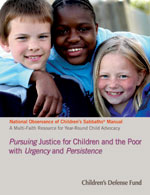
The newsletter also contains information about applying to open a new CDF Freedom school site, a new campaign "Be Careful What You Cut" which talks about the cuts to social programs and the date the new poverty data will be available.
I think this website is a prime example of what we are learning about in this class. The Children Sabbath Manual, what the program stands for and promotes is what we as educators promotes. This website is truly diversified and represents children, their families and the communities in which they live. I would recommend this website for all.
Subscribe to:
Posts (Atom)